
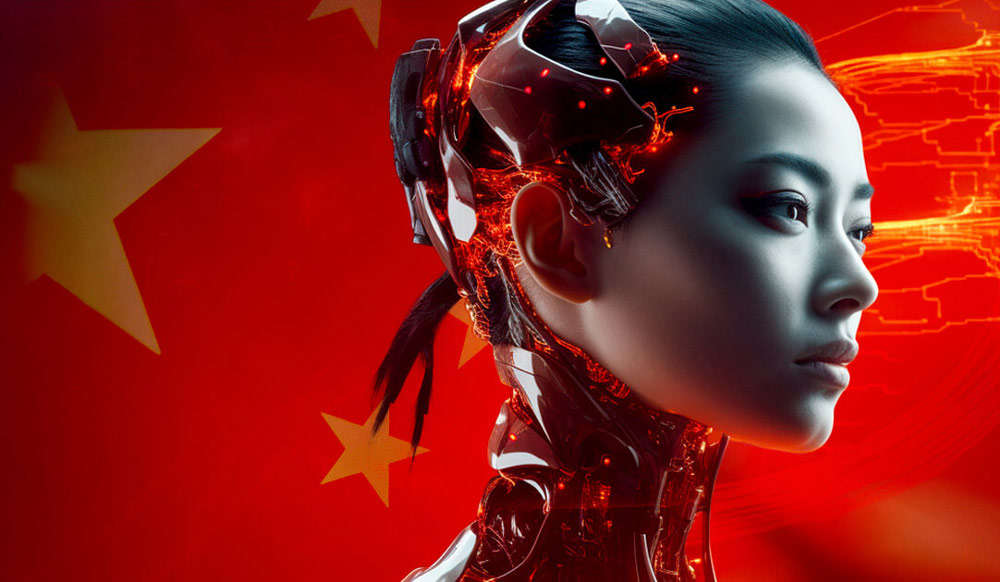
Middle Eastern sovereign funds are witnessing substantial gains from their investments in recently-listed Chinese artificial intelligence companies, even amidst a global stock sell-off prompted by ongoing conflicts in the Gulf region.
Exceptional Gains on Key AI Investments
The Abu Dhabi Investment Authority (ADIA) and Aramco Ventures have seen extraordinary returns from their strategic bets on Chinese AI firms. ADIA’s $65 million investment in MiniMax Group, made during its initial listing in Hong Kong this January as a lead investor, has skyrocketed to over $400 million — more than six times the initial outlay.
Similarly, Aramco Ventures’ pre-IPO investment of $30 million in Knowledge Atlas Technology, known widely as Zhipu, has surged to around $415 million since the company went public earlier this year.
These two Chinese AI companies, MiniMax and Zhipu, have emerged as some of the best-performing IPOs in 2026. Their impressive public market debuts coincided with strong momentum following the launch of OpenAI’s ChatGPT, which has positioned generative AI companies at the forefront of technology investments.
A Rare Bright Spot Amid Global Uncertainty
The outstanding performance of these Chinese AI firms has highlighted strong investor appetite for this sector, in stark contrast to a broader global market downturn. Recent geopolitical unrest, including attacks targeting energy and infrastructure in the Gulf, has shaken oil markets and put additional pressure on assets across the region.
Despite the challenges, sovereign funds such as ADIA — with an estimated $1 trillion in assets under management — and Aramco Ventures — managing around $7 billion — have demonstrated resilience. Their investments in Chinese technology provide a relatively small but lucrative diversification as the global economy navigates uncertainty.
Strategic Balancing Between Major Markets
Middle Eastern sovereign wealth funds are navigating a delicate balance between their key markets, the United States and China. While some Gulf-based entities have sought to reduce exposure to China in favor of investments in Western markets, others maintain interest in Beijing’s opportunities while avoiding deals that could stoke geopolitical tensions with Washington.
Beyond AI, Middle Eastern funds remain active in global deal-making, with ADIA previously participating in an $8.3 billion transaction for a shopping mall unit of Dalian Wanda Group and a $4 billion IPO of Mediatek Group. Similarly, Saudi’s Public Investment Fund (PIF) recently agreed to acquire Moonton, a gaming company owned by ByteDance, for $6 billion.
A Bold Vision Amid Geopolitical Tensions
The resilience of Gulf sovereign funds underscores their strategic commitment to diversifying investments across sectors and regions. Even with regional conflicts and broader market disruptions, plans to pump trillions of dollars into global markets, particularly the United States, remain intact.
In a recent statement, the UAE ambassador to the United States reiterated the country’s commitment to American partnerships, despite concerns of fiscal strain due to the ongoing Gulf conflict.
 ↔
↔ 
 ↔
↔  ↔
↔  ↔
↔  ↔
↔  ↔
↔  ↔
↔  ↔
↔  ↔
↔  ↔
↔  →
→  →
→  →
→  →
→  →
→  →
→  →
→