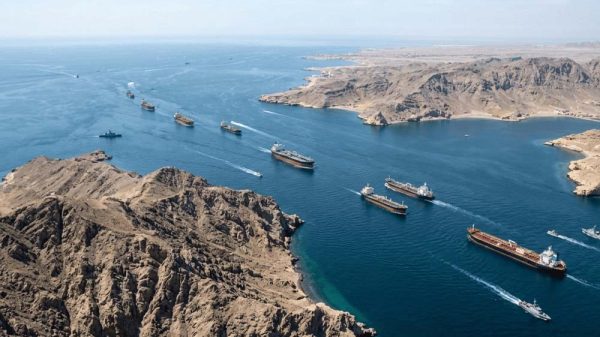

Oil prices have surged from their lowest levels since 2021 after the United States intensified its measures against Venezuela by imposing a blockade on oil tankers operating under sanctions near the South American country’s coast.
Brent crude rose above $59 per barrel, recovering from a 5% loss in the past four trading sessions, while West Texas Intermediate (WTI) traded near $56 per barrel.
U.S. Pressure on Venezuela
The escalation comes after U.S. President Donald Trump announced on social media that he had ordered a blockade on crude oil tankers entering and exiting Venezuela. This move marks a significant step in the ongoing confrontation, following the seizure of a Venezuelan oil tanker by U.S. forces last week. Additionally, Trump declared the government of Venezuelan President Nicolás Maduro as a “foreign terrorist organization.”
Impacts on Venezuela’s Oil Exports
Venezuela’s oil production has seen some recovery since hitting record lows in 2020, but it remains far from its peak levels of past decades. In November 2025, the country exported 590,000 barrels per day—an amount dwarfed by global oil consumption of over 100 million barrels per day. Most of Venezuela’s crude exports are destined for China.
However, analysts warn that continued U.S. actions could disrupt these exports. According to Rapidan Energy, as much as 30% of Venezuela’s shipments are at risk if hostilities escalate further. Chinese refineries, which heavily rely on Venezuelan oil, may be forced to seek costlier alternatives if disruptions persist.
Global Market Reactions
Despite the geopolitical tensions, the oil market has remained relatively steady. Warren Patterson, Head of Commodity Strategy at ING, noted that the market has been largely calm in the face of supply risks due to expected ample production through 2026. However, oil prices have risen slightly, with Brent and WTI gaining less than 1%.
Broader Market Trends
The oil market still faces challenges, including the potential for an annual loss due to increased production from OPEC+ and other producers, combined with weakened demand. Traders are also closely monitoring peace talks in Ukraine, which could lead to eased restrictions on Russian oil exports, further influencing global supply dynamics.
While the immediate price increases highlight market sensitivity to political developments, broader factors such as production levels, demand stability, and geopolitical risks will continue to shape the oil market heading into 2026.

 ↔
↔ 
 ↔
↔  ↔
↔  ↔
↔  ↔
↔  ↔
↔  ↔
↔  ↔
↔  ↔
↔  ↔
↔  →
→  →
→  →
→  →
→  →
→  →
→  →
→