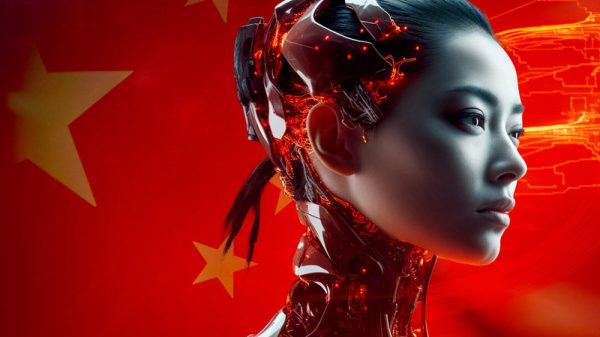


In a surprising decision, the U.S. government, under President Donald Trump, has allowed NVIDIA to sell its advanced artificial intelligence (AI) chips—specifically the H200 model—to China. While this decision appears to mark a shift in U.S. policy regarding the export of advanced technology to its primary geopolitical rival, the reasoning behind it points directly to the competitive landscape between NVIDIA and Huawei in the AI hardware market.
The Strategic Decision
According to sources familiar with the discussions, the U.S. assessed that selling the H200 chips to China posed fewer national security threats than previously believed. This is primarily because Huawei, China’s leading tech giant, has already developed AI systems with comparable performance. By allowing the sale, the U.S. hopes to maintain its technological leadership while simultaneously influencing the development trajectory of Chinese AI.
The Trump administration deliberated over several scenarios, ranging from a complete ban on AI chip exports to China to flooding the Chinese market with American technology. Ultimately, the decision was framed as a middle-ground approach. The H200 chips would be allowed for export, while NVIDIA’s most advanced chips would remain exclusive to the U.S. market, granting American developers an 18-month lead over their Chinese counterparts.
The Huawei Factor
Central to this decision is Huawei’s growing capability in AI chip development. The Chinese company’s AI platform, CloudMatrix 384, powered by its Ascend chips, is reportedly on par with NVIDIA’s NVL72 system, which utilizes the company’s cutting-edge Blackwell technology. This revelation pushed U.S. officials to rethink their strategy. Allowing the H200 chips to enter the Chinese market could encourage Chinese developers to rely on and build upon U.S. technology, rather than fully committing to Huawei’s ecosystem.
Furthermore, U.S. intelligence suggests that Huawei’s Ascend 910C chips, designed to compete directly with NVIDIA’s product line, are expected to reach production levels of millions of units by 2026. This represents a significant increase from the estimated 200,000 units produced in 2025. Despite this, Huawei remains dependent on foreign components, particularly from TSMC and Samsung, which the U.S. sees as a potential vulnerability in China’s supply chain.
Balancing Competition and Security
The decision to allow H200 exports also reflects NVIDIA’s lobbying efforts. CEO Jensen Huang met with Trump and other officials to argue that strict export restrictions were hurting U.S. companies more than their Chinese competitors. Huang emphasized that American firms were losing market share to Chinese rivals like Huawei and Cambricon, whose products continue to gain traction domestically.
However, the move sparked criticism from U.S. lawmakers, particularly Democrats like Senator Elizabeth Warren, who warned that the decision could backfire. Critics argue that by providing China with advanced AI chips, the U.S. risks enabling its competitor to develop next-generation AI technologies that could undermine American technological dominance.
The Chinese Response
Despite the U.S. decision, it remains uncertain how Chinese companies will respond. Beijing has been encouraging domestic firms to reduce their reliance on American technology, particularly in sensitive sectors like AI. Government directives have reportedly urged Chinese companies to avoid NVIDIA’s chips and focus on homegrown solutions.
At the same time, Huawei and other Chinese chipmakers, such as Cambricon Technologies, are ramping up production to meet domestic demand. Huawei, for instance, plans to double its production of the Ascend 910C chips to 600,000 units in 2026. While China’s AI industry still depends on foreign components, its rapid progress raises questions about the long-term effectiveness of U.S. export policies.
A Victory for NVIDIA?
Despite the controversy, the decision represents a significant win for NVIDIA, which has been struggling to navigate the U.S.-China tech rivalry. The company estimates that restrictions on chip exports to China have cost it billions of dollars in potential revenue. By securing approval to sell the H200 chips, NVIDIA has regained access to one of the world’s largest semiconductor markets, albeit with limitations.
This policy also reflects a broader U.S. strategy of maintaining technological superiority while selectively engaging with China. By allowing limited exports, the U.S. can potentially slow China’s shift toward technological self-sufficiency while preserving its own economic interests.

 ↔
↔ 
 ↔
↔  ↔
↔  ↔
↔  ↔
↔  ↔
↔  ↔
↔  ↔
↔  ↔
↔  ↔
↔  →
→  →
→  →
→  →
→  →
→  →
→  →
→