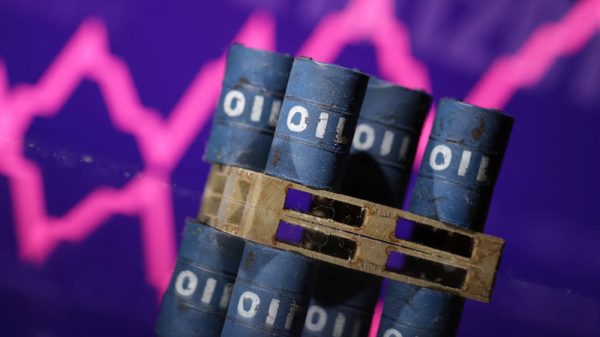

The ongoing conflict involving Iran has triggered a significant surge in natural gas prices across Europe, with futures contracts jumping as much as 25%—marking the largest increase since August 2023. This price spike comes as fears mount over a substantial disruption to global energy supplies, particularly through the Strait of Hormuz, a critical shipping route for energy exports.
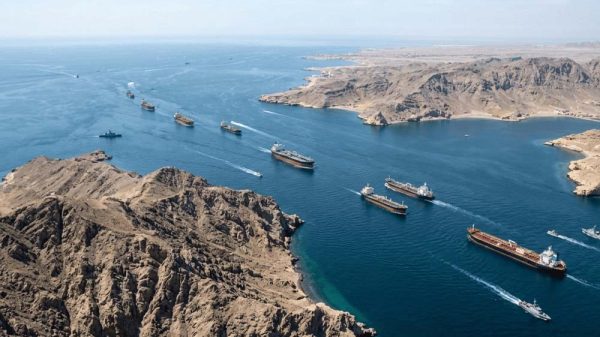
Over the past two days, tanker traffic through the Strait of Hormuz has largely come to a halt following the escalation of hostilities in the Middle East. This narrow waterway plays a pivotal role in global energy shipments, handling roughly one-fifth of the world’s liquefied natural gas (LNG) exports. Oil prices have also experienced a sharp rise alongside natural gas.
A Potential Shock to Global Energy Markets
Analysts warn that the current crisis could lead to the most significant shock to gas markets since the Russian invasion of Ukraine four years ago. While much of the LNG from the Middle East is destined for Asia, any disruption in supply chains is expected to intensify competition for alternative sources, driving up prices globally—including in Europe.
Europe remains particularly vulnerable to these developments. Despite nearing the end of winter, a period of lower gas consumption, European gas storage levels are unusually low. The region will need to import substantial LNG volumes over the summer to replenish reserves in preparation for the next heating season. According to Tom Marzec-Manser, head of gas analytics at Wood Mackenzie, “The next key question for traders will be how long the Strait of Hormuz remains closed.”
Potential for Doubling Gas Prices
Goldman Sachs has projected that a month-long disruption in shipments through the Strait could more than double European natural gas prices. This would represent a dramatic reversal from recent trends, as benchmark gas contracts had fallen by 19% in February due to mild weather and ample supply.
Simone Tagliapietra, a researcher at the Brussels-based think tank Bruegel, noted that the current situation could complicate Europe’s efforts to refill its gas storage in the coming months, placing renewed pressure on industrial energy costs.
Escalation of the Conflict
The crisis deepened over the weekend after the United States and Israel launched coordinated strikes on Iran. In response, Iran has retaliated with attacks on multiple countries. Although Iran stated that it does not intend to close the Strait of Hormuz, shipping activity in the region has already been significantly disrupted. Qatar, a major LNG exporter, has temporarily suspended all maritime operations as a precautionary measure.
Meanwhile, Israel has ordered the temporary shutdown of some of its gas production facilities as a security measure. This includes the Leviathan gas field, one of the region’s largest, which was previously shut down during a similar conflict in June last year.
Immediate Market Impact
European gas futures, particularly the Dutch TTF contracts—a benchmark for the region—rose 21% early Monday, trading at €38.72 per megawatt-hour by 8:52 a.m. in Amsterdam. Analysts have pointed out that the European gas market is even more sensitive to a potential closure of the Strait of Hormuz than the oil market, given Europe’s heavy reliance on LNG imports.
Broader Implications
As the crisis continues to unfold, questions remain about the long-term impact on global energy markets. With tanker routes disrupted, regional LNG shipments delayed, and prices surging, the European energy sector faces renewed challenges in maintaining supply stability. Prolonged disruptions could exacerbate existing vulnerabilities in the energy market, particularly as Europe seeks to transition away from Russian energy sources.

 ↔
↔ 
 ↔
↔  ↔
↔  ↔
↔  ↔
↔  ↔
↔  ↔
↔  ↔
↔  ↔
↔  ↔
↔  →
→  →
→  →
→  →
→  →
→  →
→  →
→