

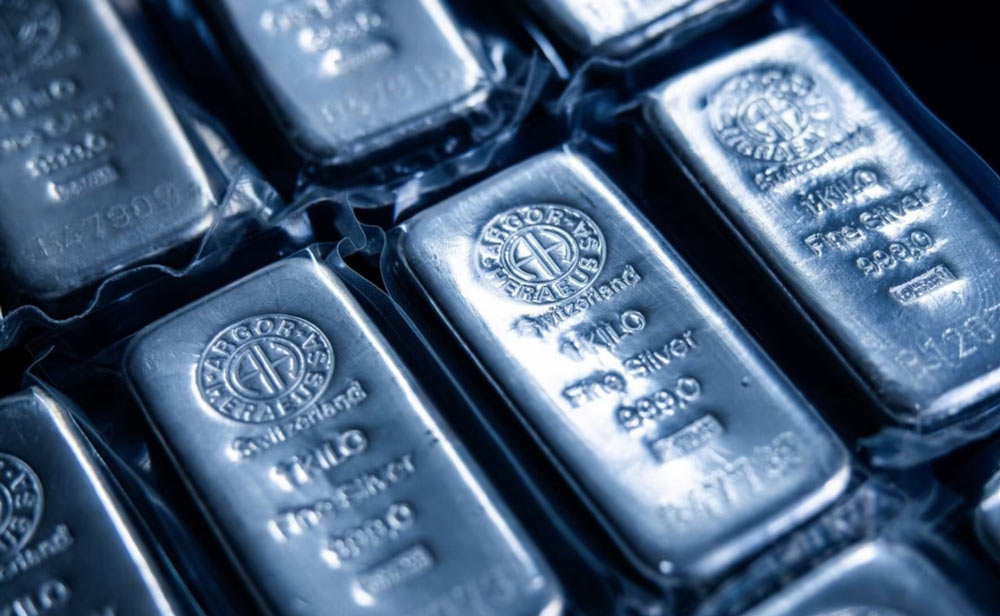
In 2025, China exported a record-breaking 5,100 tons of silver, marking the highest level of exports in over 16 years, according to customs data. This surge in silver exports has alleviated market fears about the imposition of stricter export controls, at least for the moment.
China has implemented an export licensing system for silver since 2019. However, a document issued by the Ministry of Commerce in October 2025 to extend this system through 2027 raised concerns among investors. Many interpreted the move as a signal of potential new restrictions or tighter controls on silver exports. These interpretations, coupled with a global supply shortage, fueled a rally in silver prices, pushing the precious metal to a historic high of over $95 per ounce.
Export Arrangements Remain Unchanged
Despite the concerns, major Chinese exporters have reported no significant changes in silver shipments since the issuance of the October document. According to Zi Ji Wu, an analyst at Jinrui Futures, most silver exports are conducted under pre-existing processing trade arrangements. These arrangements allow for the re-export of silver without incurring value-added tax (VAT). Wu noted that any attempt to curb silver exports would likely require the elimination of such tax exemptions on a broad scale.
China transitioned from a quota-based system to a license-based management system for silver exports seven years ago. Since then, silver exports have steadily increased each year, except for one, reflecting the expansion of the country’s non-ferrous metal refining capacities. Silver, often produced as a byproduct during the refining of other metals, has become a key export commodity under this system.
Under current Chinese policies, domestic refiners must obtain export licenses that impose no explicit volume limits. These licenses are valid for two years and require a minimum annual production capacity of 80 tons of silver—or 40 tons for companies located in the country’s western regions.
Global Market Reactions
Misinterpretations of China’s export policies have fueled speculative activity in global silver markets. Joshua Rotbart, managing partner at J. Rotbart & Co., a bullion broker serving high-net-worth clients, explained that misinformation about Chinese export policies has led to fears of missing out on potential price spikes. This fear has driven investors to buy more silver, creating a frenzy in the market.
This speculative frenzy was particularly pronounced in India, where fund managers, bullion traders, and media outlets misinterpreted China’s extension of export licensing as a change in policy. In October 2025, Indian buyers ramped up silver purchases ahead of the Diwali festival. Combined with lingering concerns about U.S. customs duties keeping supplies constrained, this drove silver prices in London to their highest levels since the 1970s.
Social media has also played a role in amplifying the silver hype. In December, Elon Musk referenced China’s export licensing extension in a post on X (formerly Twitter), further fueling speculation about the future of silver prices.
Indian Demand and Broader Implications
According to Samit Guha, CEO of MMTC-PAMP India, the country’s largest precious metals refiner, investment demand for silver in India remains high. There is particularly strong interest in small silver bars and coins. However, while China’s export policies have not yet tightened, its use of export controls for critical materials—from rare earths to antimony—has kept the market wary of potential restrictions on silver in the future.
Wu of Jinrui Futures commented that while there are no immediate signs of stricter silver export controls, the possibility cannot be entirely ruled out. The global silver market will likely continue to monitor China’s policies closely, as any significant changes could have far-reaching implications for supply and prices.

 ↔
↔ 
 ↔
↔  ↔
↔  ↔
↔  ↔
↔  ↔
↔  ↔
↔  ↔
↔  ↔
↔  ↔
↔  →
→  →
→  →
→  →
→  →
→  →
→  →
→