
In one of the most dramatic reversals energy markets have witnessed in recent memory, crude oil prices plunged below $100 a barrel on Wednesday after the United States and Iran agreed to a two-week ceasefire — contingent on Tehran reopening the Strait of Hormuz, the world’s most critical energy chokepoint.
The Final 90 Minutes
The deal came closer to the wire than anyone anticipated. President Donald Trump had set a hard deadline for Iran to reopen the strait or face what he described in a stark social media post as the death of “an entire civilization tonight.” With just 90 minutes to spare, the ceasefire was announced — and markets reacted instantly.
Iran accepted a ceasefire proposal brokered by Pakistan, with Foreign Minister Abbas Araghchi confirming that safe passage through the strait would be permitted for two weeks, coordinated with Iranian forces. Israel also agreed to halt fighting. Under the current framework, Iran and Oman would be allowed to levy fees on vessels transiting the waterway, according to the Associated Press.
Peace talks are set to begin Friday in Islamabad, where Pakistani Prime Minister Shehbaz Sharif has invited US and Iranian delegations to negotiate what he called a “decisive agreement to resolve all disputes.”
The Oil Market’s Instant Reaction
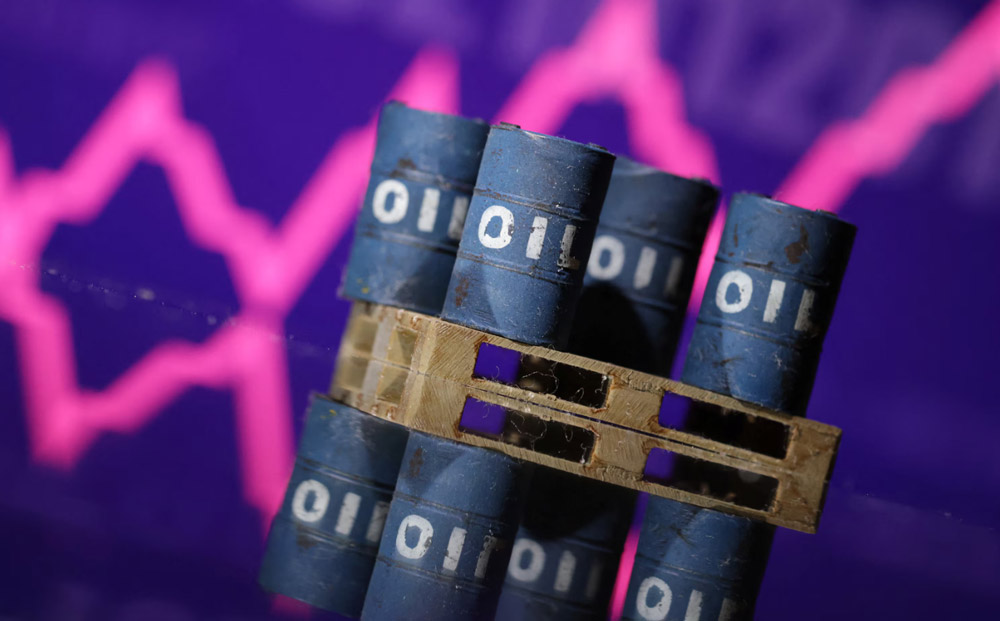
The price collapse was swift and sweeping. Brent crude dropped 16% before steadying near $95 a barrel, while West Texas Intermediate (WTI) recorded its steepest single-day fall in six years, sliding to $96 a barrel.
Refined products fared even worse. European diesel futures tumbled as much as 23% — their largest drop in over four years — while Abu Dhabi’s flagship Murbane crude futures fell 19%, the biggest decline since the contract launched in 2021.
The scale of the sell-off reflects just how much geopolitical risk had been baked into prices. As analyst Josh Gilbert of eToro put it: “This shows how much geopolitical risk was embedded in crude prices, and how quickly it can unwind when there’s a credible path to de-escalation.”
Trading volumes surged dramatically to match the moment. Around 240,000 Brent contracts were traded in the first hour alone — compared to just a few thousand in a typical session opening.
How Bad Was the Crisis?
To understand the scale of Wednesday’s relief rally, it helps to look at where prices had been. WTI had surged more than 40% since the conflict began in late February. Brent hit a peak of $112.12 a barrel in March, while WTI touched $117.63 just the day before the ceasefire announcement.
The near-complete closure of the Strait of Hormuz — through which roughly one-fifth of the world’s oil and gas normally flows — had thrown energy markets into chaos. US government estimates suggested the shipping disruptions would halt production of more than 9 million barrels per day from major Middle Eastern producers through April alone, with over 800 vessels currently stranded by the conflict.
Cautious Optimism on the Ground
Despite the headline price crash, market participants on the ground remain wary. Physical traders are holding back from purchasing Gulf shipments until they see clearer signs that the ceasefire will hold. Shipowners say they need to witness vessels safely departing the region before dispatching tankers to load supplies.
The caution is well-founded. Jason Schenker, president and chief economist at Prestige Economics, warned: “It would take something truly exceptional to get back below $80 a barrel,” adding that any breakdown in ceasefire talks “could very quickly send prices back above $100.”
Vivek Dhar of Commonwealth Bank of Australia echoed that view, noting that markets will be watching Tehran’s posture closely, and that any signs of escalation could limit further price declines.
The Road Ahead
The ceasefire may have bought breathing room, but the underlying tensions remain unresolved. Iran’s ten-point peace plan reportedly contains provisions Washington has previously deemed unworkable, and Friday’s talks in Islamabad will be the real test of whether this fragile pause can evolve into something durable.
For now, energy markets are pricing in hope — but with one eye firmly on the clock. The next two weeks may well determine whether Wednesday’s crash becomes a turning point, or merely a temporary reprieve in a conflict that has already reshaped the global energy landscape.

 ↔
↔ 
 ↔
↔  ↔
↔  ↔
↔  ↔
↔  ↔
↔  ↔
↔  ↔
↔  ↔
↔  ↔
↔  →
→  →
→  →
→  →
→  →
→  →
→  →
→