
As the ink dried on the US-Iran ceasefire agreement, ship owners across the globe were not celebrating — they were scrambling. Reports from London-based brokerage McGill & Partners confirm that vessel owners are submitting what can only be described as “large-volume requests” for insurance coverage, as they cautiously eye the possibility of resuming transit through the Strait of Hormuz.
David Smith, Head of Marine at McGill & Partners, painted a picture of a market in simultaneous flux on two fronts: surging demand on one side, and a “notable correction in pricing” on the other. Both movements are telling. Demand signals that commercial confidence, however tentative, is beginning to stir. The pricing correction signals something equally important — that the market is recalibrating risk in real time, adjusting to a landscape that changed overnight but remains deeply unstable.
War Conditions Persist Despite the Ceasefire
The central tension in all of this is captured in a single sentence from Smith: “War conditions still exist, and the Strait of Hormuz remains classified as a very high-risk zone.”
This is not semantics. In the specialised world of marine war risk insurance, classifications carry legal and financial weight. They determine premium levels, exclusion clauses, and whether underwriters will offer cover at all. The fact that Hormuz retains its “very high-risk” designation even after a ceasefire announcement tells us everything about the gap between political declarations and operational reality.
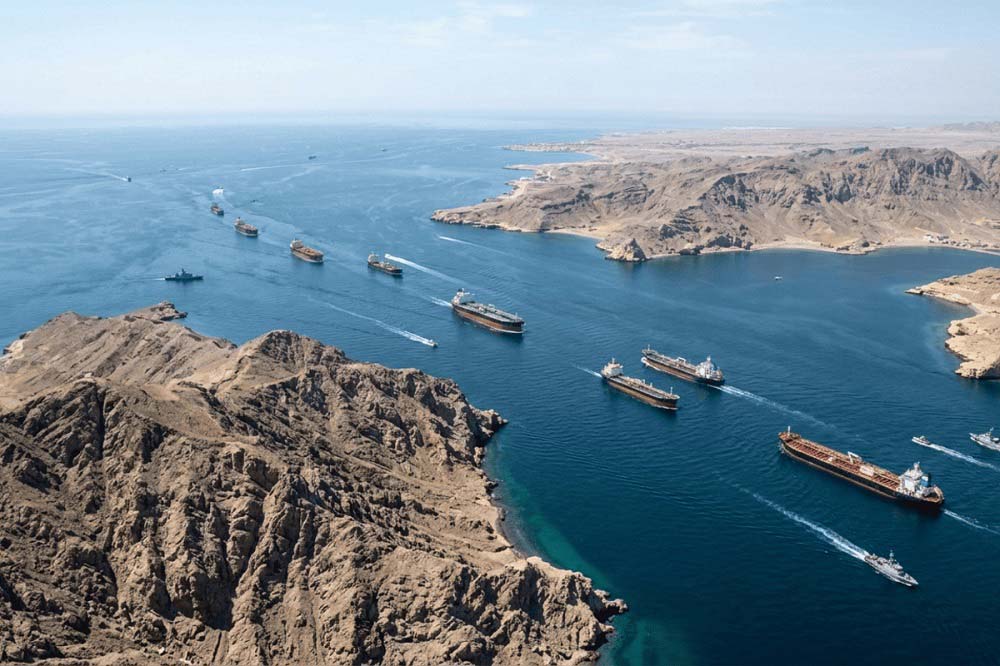
On the ground — or rather, on the water — the strait remained largely closed on Wednesday, as shipowners attempted to assess whether safe passage was genuinely possible. The ceasefire may have halted the most intense phase of hostilities, but it did not sweep the sea lanes clean of mines, resolve the ambiguities around Israeli operations in Lebanon, or guarantee the kind of institutional stability that insurers require before they move with confidence.
Insurers: Cautious, But Moving
The insurance industry’s response has been characteristically measured. Andrew James, Executive Director of Marine at Arthur J. Gallagher, acknowledged the positive direction of travel while being careful not to overstate it.
“The recent ceasefire news is positive and should facilitate transit through the Strait of Hormuz, and for vessels in the region generally,” he said — a statement of guarded optimism that reflects an industry trained by experience to avoid premature conclusions.
Crucially, James noted that underwriters have already begun factoring the ceasefire into their pricing models, with some risks seeing reductions. Yet the operative word remains caution. Insurers, he explained, “will remain cautious — understandably so — while monitoring how the situation develops.” This is not timidity; it is professional discipline. The ceasefire is six weeks old at most, fighting has not fully ceased, and the political architecture holding the agreement together remains untested.
The Broader Disruption: Six Weeks That Shook Global Shipping
To understand the scale of what the insurance market is now grappling with, it helps to step back. Since the United States began its strikes on Iran in late February, the Strait of Hormuz — through which roughly one-fifth of the world’s oil and gas once flowed — has been largely paralysed. The disruption ranks among the most severe ever recorded in global energy markets, triggering price spikes, rerouting decisions, and a cascade of risk reassessments across the entire maritime supply chain.
The current rush of insurance requests is therefore not simply a reaction to a ceasefire. It is the release of six weeks of suppressed commercial demand, suddenly finding an outlet as shipowners sense — rightly or wrongly — that a window may be opening.
The Road Ahead: Diplomacy and Doubts
Washington and Tehran are due to hold direct talks in Pakistan this coming Saturday, led by Vice President JD Vance on the American side. These negotiations represent the next critical test of whether the ceasefire can harden into something more durable. Markets and insurers alike will be watching closely — not just for the outcome, but for the tone, the language, and the signals that emerge from the room.
Until there is greater clarity, the insurance sector finds itself in a familiar position: pricing risk under conditions of profound uncertainty, balancing commercial pressure from clients eager to resume operations against the professional obligation to avoid underwriting disasters.

 ↔
↔ 
 ↔
↔  ↔
↔  ↔
↔  ↔
↔  ↔
↔  ↔
↔  ↔
↔  ↔
↔  ↔
↔  →
→  →
→  →
→  →
→  →
→  →
→  →
→