
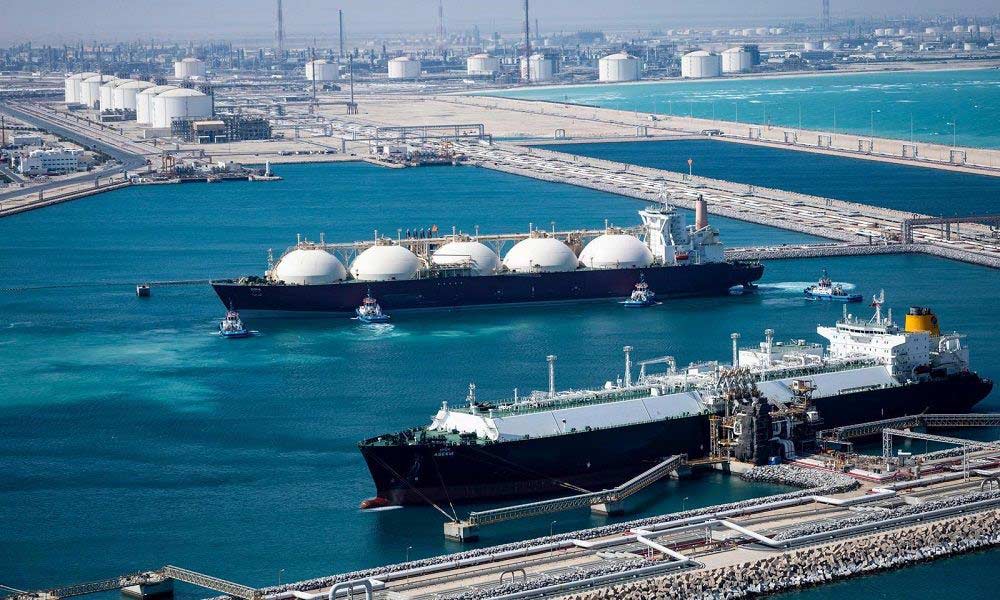
As the Middle East conflict intensifies, Asian countries are scrambling to secure liquefied natural gas (LNG) supplies in anticipation of prolonged disruptions that could tighten the global market and drive prices even higher. The ongoing war involving the United States and Israel against Iran has already caused significant upheaval in the energy sector, with Qatar—the largest LNG exporter—shutting down key export facilities.
Asian Buyers Prepare for Extended Supply Challenges
Importers of LNG in Asia, including Thailand, Bangladesh, Taiwan, and South Korea, are making urgent efforts to stockpile supplies to safeguard against potential shortages. According to market traders, Thailand is actively purchasing shipments for delivery through May, while Bangladesh has already secured April shipments and is exploring additional purchases starting in May. Major buyers in Taiwan and South Korea are also positioning themselves to acquire extra LNG over the coming months.
These efforts reflect a growing concern across the region that the Middle East conflict, alongside the closure of Qatar’s Ras Laffan LNG export facility, could have a lasting impact on global LNG supply chains. Ras Laffan, which accounts for approximately 20% of the world’s LNG exports, was shut down following an Iranian drone strike last week. The disruption has sent shockwaves through the market, as there are no viable alternative export routes or sufficient surplus production capacity elsewhere to compensate for the loss.
LNG Prices Surge Amid Market Uncertainty
The supply disruptions have led to a sharp increase in LNG spot prices in Asia, which are now trading near $18 per million British thermal units (MMBtu). Although prices have eased from last week’s peak of $25 per MMBtu, they remain approximately 80% higher than pre-conflict levels. This price escalation has also been exacerbated by the rerouting of LNG shipments initially destined for Europe; at least nine cargoes have been diverted to Asia, where buyers are offering higher premiums to secure supplies.
Force Majeure Declared on Qatari LNG Shipments
Adding to the turmoil, several LNG suppliers, including Shell, have declared force majeure on Qatari shipments. This legal provision allows companies to suspend contractual obligations due to extraordinary events like the current geopolitical crisis. The move has further strained supply availability, with Asian importers scrambling to find alternative sources.
Emergency Actions Across Asia
In response to the crisis, Taiwan has announced that it has secured sufficient LNG supplies for March and April and is working to secure additional shipments for May. Michelle Lee, a spokesperson for Taiwan’s Cabinet, emphasized the importance of ensuring energy security in light of the volatile market conditions.
India, which imports nearly half of its LNG from Qatar, is also taking swift action. Indian companies like GAIL India are competing for immediate-delivery shipments. GAIL successfully booked a cargo for March after multiple failed attempts, while other Indian firms continue to search for additional supplies.

 ↔
↔ 
 ↔
↔  ↔
↔  ↔
↔  ↔
↔  ↔
↔  ↔
↔  ↔
↔  ↔
↔  ↔
↔  →
→  →
→  →
→  →
→  →
→  →
→  →
→