

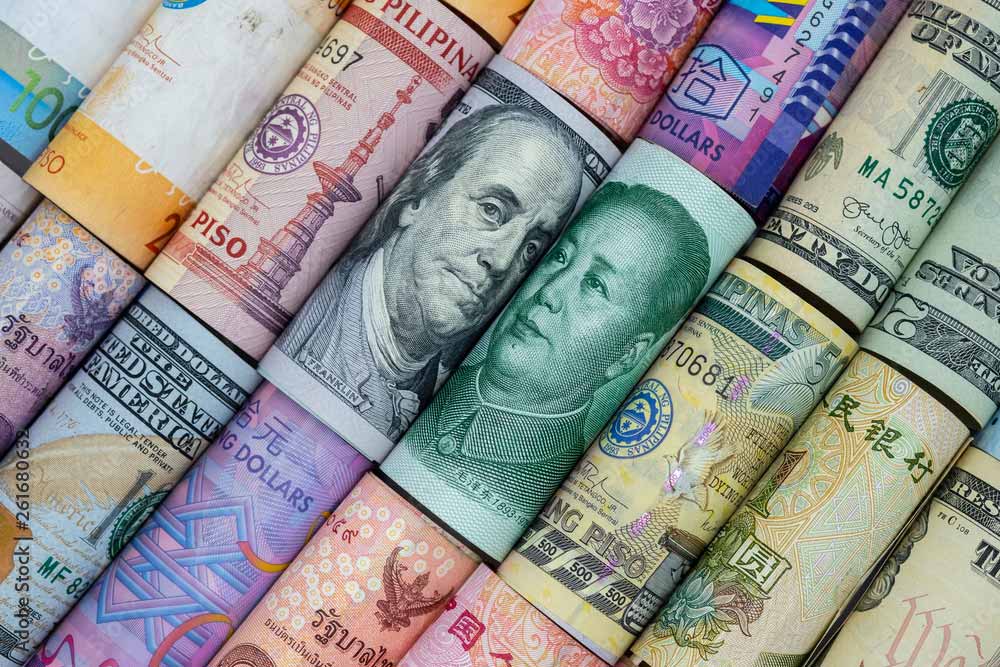
The Chinese yuan has strengthened, surpassing the critical 7-per-dollar threshold in the tightly regulated domestic market for the first time since 2023. This marks a significant milestone, reflecting China’s comfort with a stronger currency and its potential economic benefits.
In the domestic market, the yuan appreciated by 0.2%, reaching 6.99 per dollar during Tuesday’s trading. This move comes amid a slight decline in the U.S. dollar and year-end foreign currency sales by Chinese companies and exporters. Earlier this week, the yuan also breached the 7-per-dollar level in offshore trading, which operates under less stringent controls.
Chinese Banks Boost Dollar Purchases
Major Chinese banks increased their dollar purchases after the yuan crossed the 7-per-dollar mark domestically. According to unidentified traders, the market witnessed significant dollar selling, partly driven by companies finalizing year-end settlements with suppliers.
Wei Khun Chung, a market strategist at Bank of New York Mellon, stated, “The yuan could experience further appreciation, supported by foreign capital inflows, growth recovery expectations, and optimism about the tech sector. We are highly confident that the yuan will continue to strengthen in 2026, backed by financial flows and economic recovery.”
Importance of Domestic Market Movements
Movements in the domestic yuan market are considered more significant than offshore fluctuations, as the domestic market operates within a 2% trading band set by the daily reference rate. The Chinese authorities maintain stricter control over this market, actively managing the currency’s performance.
Government Intervention and Economic Outlook
Authorities in Beijing have guided the yuan to rise gradually, aiming to please trade partners while avoiding sharp capital inflows. Recently, state-owned banks have played a more prominent role in managing the currency’s trajectory to ensure stability.
The yuan is on track to post its best annual performance in five years, fueled by rising optimism about Chinese assets and the country’s economy, despite ongoing trade tensions with the U.S. However, the People’s Bank of China (PBOC) has expressed caution, stating that it will maintain exchange rate flexibility while preventing excessive volatility.
To slow the yuan’s rise, the central bank has recently set weaker-than-expected daily reference rates. Mark Cranfield, an analyst at Bloomberg, noted that “the necessary factors for yuan gains are in place, provided the pace remains steady.” He added that historical data suggests the 7-per-dollar level is not particularly critical for the PBOC.
Yuan’s Global Performance
Despite its 4% appreciation against the U.S. dollar this year, the yuan has weakened relative to the currencies of several key trade partners. An official index measuring the yuan’s strength on a trade-weighted basis fell 3.8% in 2025.
Mingze Wu, a trader at StoneX in Singapore, suggested that sharp moves below the 7-per-dollar threshold could prompt intervention by the PBOC. However, gradual movements are unlikely to trigger a response. “There are strong reasons for the PBOC to support a slightly stronger yuan, as long as the adjustments remain moderate,” he said.
Benefits of a Stronger Yuan
A stronger yuan helps reduce import costs and supports China’s long-term goal of internationalizing its currency. However, policymakers face the challenge of balancing a stronger yuan with maintaining economic stability. The central bank has emphasized its commitment to flexibility and stability in the exchange rate to avoid sudden changes that could disrupt markets.
With China’s economy showing signs of recovery and optimism rising in sectors like technology, the yuan’s recent gains underscore growing confidence in the country’s economic outlook.

 ↔
↔ 
 ↔
↔  ↔
↔  ↔
↔  ↔
↔  ↔
↔  ↔
↔  ↔
↔  ↔
↔  ↔
↔  →
→  →
→  →
→  →
→  →
→  →
→  →
→