
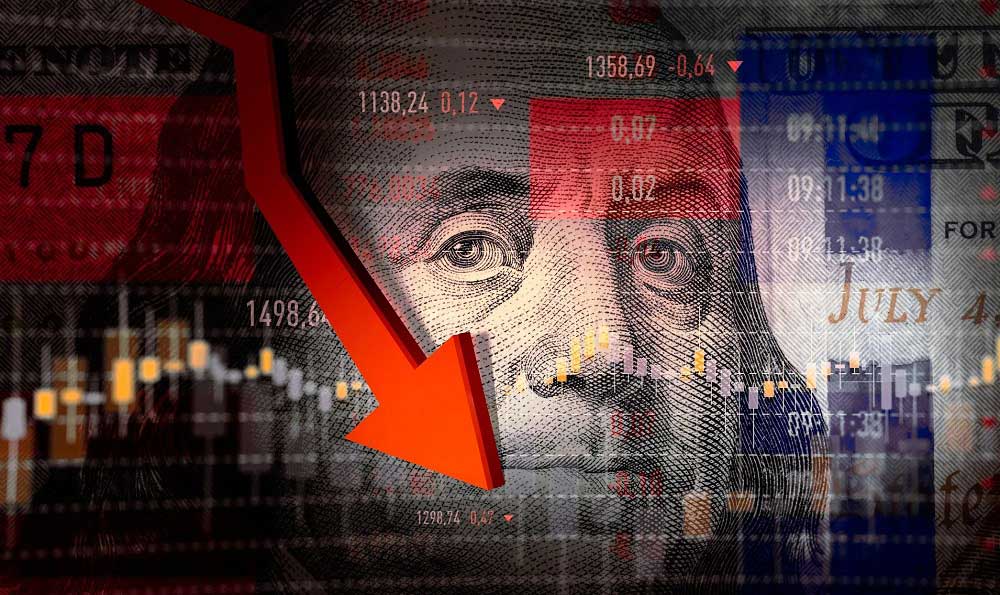
The U.S. dollar has been under intense pressure recently, facing declines against multiple major currencies as global economic dynamics shift. Discussions of potential coordinated intervention by the United States and Japan to weaken the dollar have added to the uncertainty surrounding the global reserve currency.
Dollar Weakness and Market Reactions
The dollar experienced its worst performance since May, losing ground to major currencies like the Japanese yen, which saw a significant surge. Gold also reached an all-time high on Monday, surpassing $5,000 per ounce, as investors sought safe-haven assets amid heightened geopolitical risks and economic instability.
The weakening dollar is attributed to a series of unexpected U.S. policy decisions that have shaken financial markets. These include concerns over Federal Reserve independence, expectations of faster interest rate cuts, rising fiscal deficits, and growing political polarization in the U.S.
Potential Intervention to Weaken the Dollar
For many analysts, the possibility of the U.S. joining Japan in intervening in the foreign exchange market has reignited debates about coordinated efforts to lower the dollar’s value. Such a move could potentially benefit American exporters by making their goods more competitive against rivals like China and Japan. However, it raises questions about the long-term stability of the dollar as the world’s primary reserve currency.
The U.S. Treasury typically determines currency policy, with the Federal Reserve Bank of New York executing any interventions. According to Gareth Berry, a strategist at Macquarie Group, the involvement of the Federal Reserve Bank of New York in such an intervention would not only bolster the yen but also signal a broader intention to weaken the dollar. He noted that Japan has substantial dollar reserves to sell, but the New York Fed’s unlimited resources would have a profound impact on global markets.
Historical Context and Renewed Speculation
Coordinated interventions to support the yen have been rare, with notable examples including the 1998 intervention and the 1985 “Plaza Accord,” where the U.S. and other major economies agreed to weaken the dollar. More recently, the concept of a “Mar-a-Lago Accord” has been floated, referencing a 2022 paper by Stephen Miran, a Trump administration economist, advocating for the deliberate weakening of the dollar.
Speculation about such interventions intensified last week when reports emerged that the New York Fed had reached out to financial institutions to inquire about yen exchange rates. Analysts interpreted this as a possible precursor to U.S.-Japan coordination, which could disrupt the dollar-yen exchange rate and make dollar-buying positions more vulnerable.
Broader Implications for the Dollar
The growing pressures on the dollar are compounded by geopolitical tensions and evolving trade dynamics. President Trump has threatened tariffs on Europe and Canada, further straining international trade relations. This adds to market concerns about the sustainability of the dollar’s dominance in global finance.
Meanwhile, Asian currencies are gaining ground. The Singapore dollar hit its highest level since 2014, while the Malaysian ringgit reached its strongest point since 2018. The Korean won also rallied, supported by rare vocal backing from U.S. Treasury officials earlier this month.
Divergent Opinions on U.S. Policy Goals
Despite the speculation, there is no unified consensus on whether the U.S. is actively pursuing a weaker dollar policy. Treasury officials have publicly maintained a commitment to a “strong dollar” policy, though some analysts argue that recent actions undermine this stance. Any coordinated intervention, particularly one involving the Federal Reserve, could undermine investor confidence in the dollar and signal a broader willingness to loosen global monetary conditions.

 ↔
↔ 
 ↔
↔  ↔
↔  ↔
↔  ↔
↔  ↔
↔  ↔
↔  ↔
↔  ↔
↔  ↔
↔  →
→  →
→  →
→  →
→  →
→  →
→  →
→