
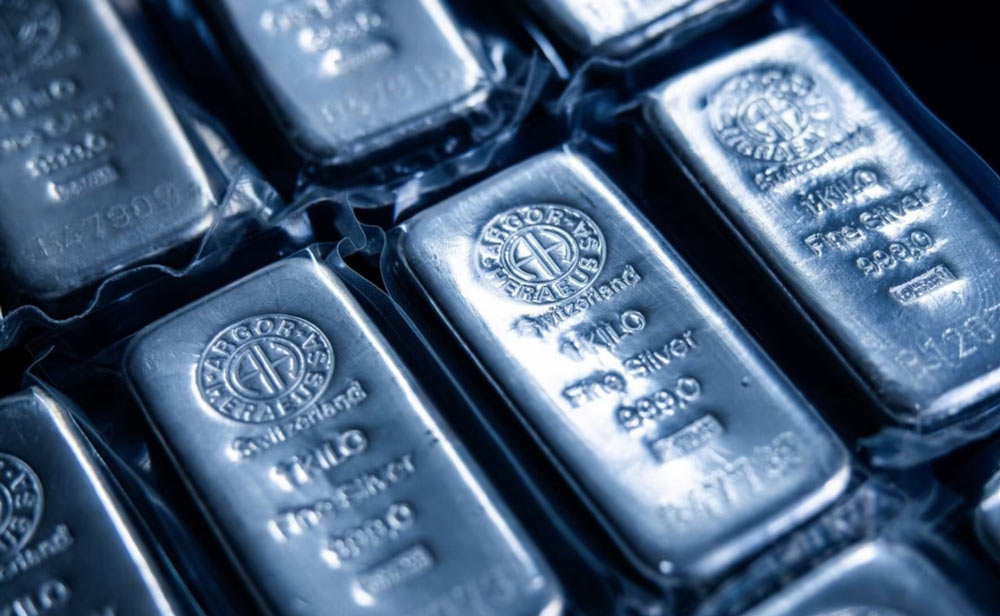
In 2025, the precious metals market has seen dramatic movements, with both gold and silver experiencing sharp price increases driven by global economic challenges. However, silver has stolen the spotlight, with its price surging by 100% as of early December, compared to gold’s 60% rise. What has caused silver to outperform gold so significantly?
Rising Demand for Silver and Its Industrial Role
While gold is traditionally considered a safe haven for investors, silver’s diverse industrial applications set it apart, making it more sensitive to economic cycles. Silver is widely used in industries such as electronics, electric vehicles, batteries, and solar panels. For instance, silver paste is a critical component in manufacturing solar panels, and the metal is also utilized in medical equipment coatings and jewelry.
This broad range of uses has driven demand for silver to skyrocket, especially as global stockpiles have dropped to record lows. With investors rushing to secure more of the metal, the risk of supply shortages has increased, causing prices to surge.
Global Economic Factors
Global economic pressures have played a significant role in boosting silver’s status as an investment asset. High debt burdens in major economies such as the United States, France, and Japan, combined with a lack of political will to address these issues, have led investors to seek alternatives like silver. Furthermore, silver’s lower price compared to gold has encouraged more investors to turn to the white metal.
Additionally, inflation and weakening currencies have bolstered demand for precious metals overall. With silver being a more affordable and highly tradable option, it has become an attractive choice for individual investors.
Declining Global Silver Production
Global silver mining production has faced significant challenges in recent years, including lower ore grades and limited development of new projects. Major silver-producing countries such as Mexico, Peru, and China have encountered regulatory hurdles and environmental restrictions, leading to reduced output. Notably, global demand for silver has exceeded mine production for five consecutive years, further exacerbating supply shortages.
The Role of ETFs and Seasonal Demand
Exchange-traded funds (ETFs) backed by silver have attracted substantial new investments, with over 100 million ounces flowing into these funds in a short period. Additionally, the festive season in India during October contributed to increased demand for silver, as silver jewelry remains a cultural staple in the country.
Trade Policies and Renewable Energy Impact
Speculation earlier this year that the United States might impose tariffs on silver prompted traders to stockpile the metal to capitalize on premium prices. Moreover, policies supporting renewable energy have driven up demand for silver used in solar panels, adding further upward pressure on prices.
Unique Market Dynamics of Silver
Silver’s market dynamics differ significantly from gold’s. Its price is influenced by a wide range of factors, including shifts in manufacturing cycles, interest rates, and renewable energy policies. While a strong global economy tends to increase industrial demand and push silver prices higher, economic downturns often see investors enter the market as alternative buyers.
Unlike gold, the silver market is smaller, with lower daily trading volumes and stockpiles. This makes it more prone to rapid price swings. For example, the value of silver stored in London is estimated at $50 billion, compared to gold’s $1.2 trillion. Additionally, while central banks hold large reserves of gold that can be lent out in times of liquidity crises, no such safety net exists for silver.
Record-Breaking Price Movements in 2025
Silver often moves in tandem with gold but exhibits more dramatic price swings. After gold’s price rise earlier in 2025, some investors pointed to the extended price ratio between the two metals (over 100:1). Silver’s undervaluation compared to gold encouraged increased investment in the white metal.
Heavy debt loads in key global economies and limited political action to address them also led investors to shift away from government bonds and currencies toward alternative assets like silver. This trend, known as “value erosion trading,” has further supported silver’s price growth.
Simultaneously, global silver production has been hampered by declining ore grades, limited project development, and setbacks in leading producing countries. For five consecutive years, global silver demand has outpaced mine production, drawing further interest from investors.

 ↔
↔ 
 ↔
↔  ↔
↔  ↔
↔  ↔
↔  ↔
↔  ↔
↔  ↔
↔  ↔
↔  ↔
↔  →
→  →
→  →
→  →
→  →
→  →
→  →
→