
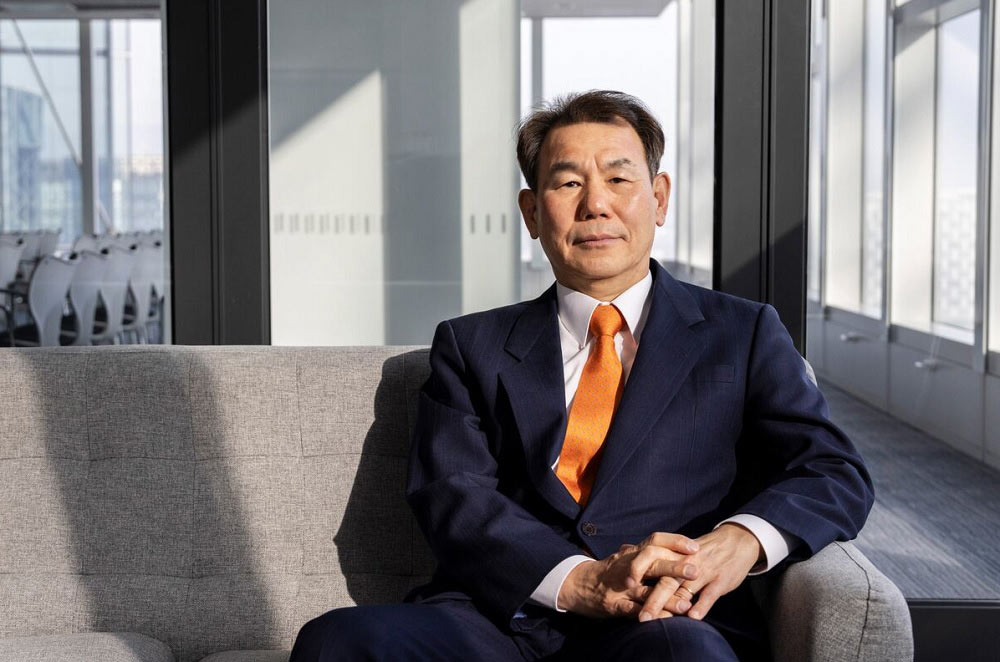
Jeong Eun-bo, CEO of the Korea Exchange (KRX), has expressed optimism that South Korea’s globally outperforming stock market will continue its upward trajectory. This optimism comes as the country intensifies efforts to boost shareholder returns and attract global capital.
Currently, the benchmark KOSPI index sits just 2% shy of the 5,000-point milestone, a level once considered an ambitious goal and promised by South Korean President Lee Jae-myung during his election campaign. Remarkably, the KOSPI has surged over 94% in the past twelve months, driven primarily by soaring stocks in artificial intelligence and defense sectors—two industries that have captured significant global investor interest. Additionally, pivotal corporate governance reforms enacted by local legislators have further fueled market confidence.
Competitive Advantage of South Korean Sectors
In an interview with Bloomberg News, Jeong noted, “The KOSPI index is nearing 5,000 points, but I believe it could surpass that level and potentially reach 6,000 points.” He attributed this bullish outlook to the enhanced competitive edge of key South Korean industries, such as semiconductors, defense, and shipbuilding, which are driving the upward re-evaluation of the market.
If the KOSPI achieves the 6,000-point mark, it would represent an additional 22% gain. While the index has shown extraordinary momentum, rising for 12 consecutive sessions and hitting record highs earlier this week, market observers, including analysts at HSBC Holdings Plc., have urged caution. Concerns include limited market breadth, the depreciation of the Korean won, and fears of a potential artificial intelligence bubble.
Rising Interest in the KOSPI
Investor interest in South Korea’s $3 trillion stock market has grown significantly since President Lee pledged to push the KOSPI to 5,000 points last April. At the time, this goal seemed improbable, given the lingering impact of martial law declarations in December 2024, which exacerbated the so-called “Korea Discount”—a chronic undervaluation of South Korean stocks due to weak corporate governance standards.
The KOSPI’s 12-month rally has been the strongest among over 90 global stock indices tracked by Bloomberg. However, local investors have largely stayed on the sidelines, recording net sales of KOSPI stocks and even betting on a market downturn. According to data from Koscom, a reverse exchange-traded product designed to profit from a declining KOSPI has seen record sales this year.
To attract more retail investors, the Korea Exchange has introduced initiatives such as loosening restrictions on leveraged exchange-traded funds (ETFs) and expanding trading hours to nearly 24/7. Additionally, the exchange is expediting the delisting of so-called “zombie companies”—firms that fail to generate enough profit to cover their interest payments. Jeong highlighted the need to remove these underperforming businesses to restore market confidence, emphasizing that South Korea’s 2,800 listed companies are disproportionately high given the size of its economy and capital market.
Focus on Corporate Reforms
Jeong’s positive outlook is underpinned by the government’s continued focus on corporate reforms. Samsung Electronics, one of the largest companies in the KOSPI index, is expected to announce measures to improve shareholder returns by July. Furthermore, South Korea is working to elevate its market classification to “developed” status, a move that Jeong anticipates will take several years but would deliver significant benefits.
“The inflows of capital will far exceed the outflows,” Jeong remarked, explaining that mandatory asset allocation by global funds into the upgraded market would drive substantial gains.
As South Korea’s stock market continues to outperform global peers, the Korea Exchange’s strategic initiatives and the government’s reform agenda aim to sustain this remarkable growth trajectory while addressing lingering challenges.
 ↔
↔ 
 ↔
↔  ↔
↔  ↔
↔  ↔
↔  ↔
↔  ↔
↔  ↔
↔  ↔
↔  ↔
↔  →
→  →
→  →
→  →
→  →
→  →
→  →
→