
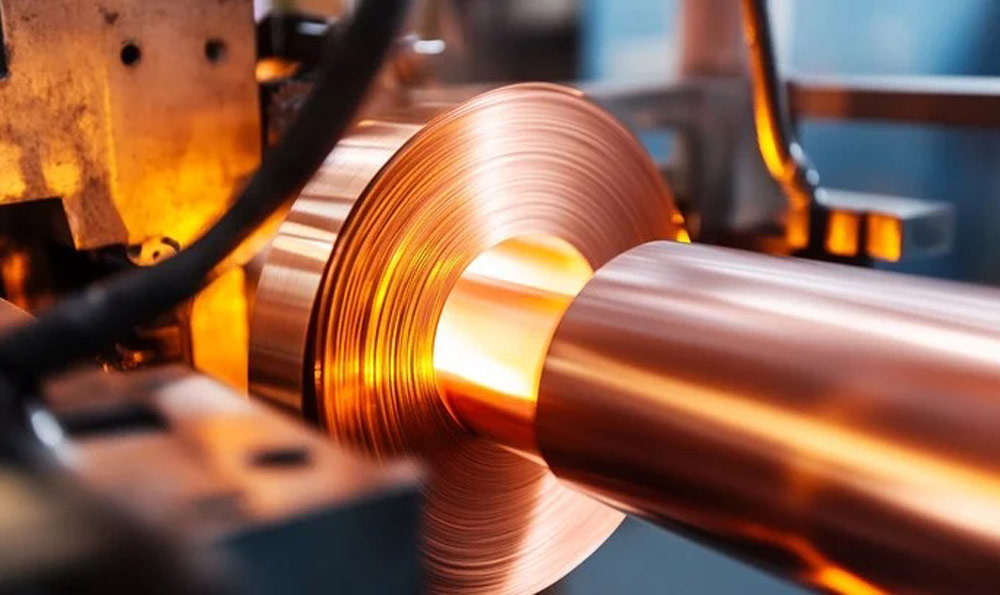
Copper prices have staged a remarkable recovery, fully erasing the losses triggered by the ongoing conflict in the Middle East that has rattled commodity markets for more than six weeks. The industrial metal’s rebound reflects a broader shift in market sentiment, as traders pivot from fear toward cautious optimism over the prospect of a diplomatic resolution between the United States and Iran.
From Shock to Recovery
When US and Israeli strikes on Iran began in late February, copper — like most base metals — took an immediate hit. Concerns over supply chain disruptions and slowing global economic growth sent prices sharply lower, as markets priced in the worst-case scenarios of a prolonged regional conflict. But the tide began to turn last week after a temporary ceasefire agreement was reached, and momentum has since built considerably.
On Wednesday, copper rose 0.8% in London, breaking past the $13,343.50 per tonne closing price recorded on February 27 — the final session before the strikes commenced. Reports that Washington and Tehran are now arranging a second round of peace talks in the coming days have further fuelled the rally, alongside encouraging signals from Chinese demand.
China Leads the Charge Back
A decisive factor behind copper’s recovery has been China’s renewed appetite for the metal. As domestic prices fell below 100,000 yuan per tonne in the weeks following the outbreak of hostilities, Chinese factories seized the opportunity, ramping up purchases and drawing heavily on local inventories.
“Copper is back,” said Van Roy, analyst at Guoyuan Futures. “It started with restocking in China, then inflation fears faded amid the peace talks. The worst phase is over.”
This assessment captures the dual dynamic at play: a geopolitical thaw reducing risk premiums, and Chinese industrial demand providing tangible buying support from the ground up.
A Long-Term Silver Lining
Beyond the immediate price action, some analysts are drawing a longer arc — arguing that the energy shock caused by the conflict may paradoxically accelerate copper’s structural bull case. Henry Van, analyst at Trafigura Group, made that argument at an industry conference in Santiago, suggesting that the crisis has strengthened the economic rationale for electrification.
“All the big trends that were driving copper higher will now become more powerful,” he said, pointing to the renewed urgency among governments and corporations to reduce their exposure to geopolitical energy shocks by accelerating the transition to electricity-based systems. Copper, as the essential conductor underpinning everything from power grids to electric vehicles, stands to be a primary beneficiary of that shift.
The COMEX Premium and the Tariff Wildcard
In the United States, copper markets are telling their own story. The COMEX exchange in New York recorded a premium of $283 per tonne over London Metal Exchange prices this week — the highest since December — a gap largely attributed to the tariffs on copper imports proposed by President Donald Trump. That policy has incentivised traders to ship physical copper into US exchange warehouses, creating a persistent price wedge between American and international benchmarks.
Investors are now watching closely for a Commerce Department update on US copper markets, expected by the end of June, which could bring clarity on tariffs for refined copper — a decision that carries significant implications for global trade flows and domestic pricing.
Aluminium’s Separate Drama
Not all base metals are following the same script. Aluminium has been an outlier throughout this crisis, buoyed by specific supply concerns tied to attacks on smelters in the Gulf region. The metal edged up 0.65% to $3,586 per tonne on Wednesday, reflecting a market still pricing in meaningful supply-side risk independent of the broader geopolitical sentiment shift.
The Bigger Picture
Copper’s swift recovery from conflict-driven losses is a testament to the metal’s underlying demand fundamentals. While the war in the Middle East introduced short-term volatility, it has done little to alter the structural forces driving copper’s long-term outlook. If anything, the crisis has sharpened the case for energy diversification and electrification — trends that are deeply copper-intensive.

 ↔
↔ 
 ↔
↔  ↔
↔  ↔
↔  ↔
↔  ↔
↔  ↔
↔  ↔
↔  ↔
↔  ↔
↔  →
→  →
→  →
→  →
→  →
→  →
→  →
→