
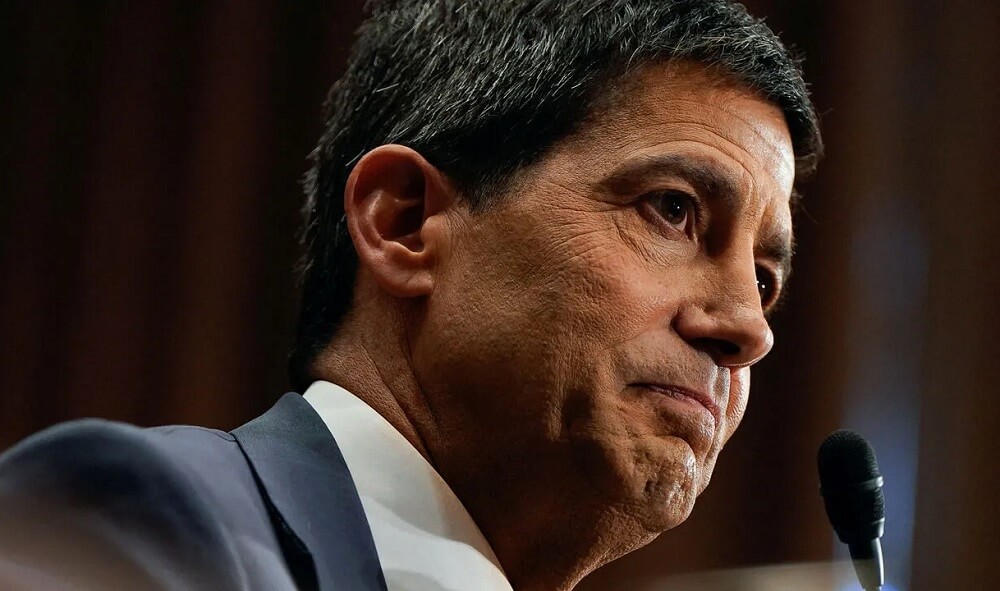
In the fall of 2008, as panic spread through Wall Street and American companies were shedding hundreds of thousands of jobs, the Fed cut rates to near zero and rolled out a series of emergency measures. Kevin Warsh voted for those cuts. He also issued a warning that September: “I am not yet willing to cede my concerns about inflation.”
That position defined him for the next fifteen years — inside the Fed, in academic papers, in op-eds criticizing both Janet Yellen and Jerome Powell. Then Trump nominated him to run the place he’d spent years criticizing.
The obvious question is why. Trump wanted lower rates badly. At one point he floated a three-point cut as “just right.” Powell’s Fed moved slowly. Nominating a known inflation hawk to replace him doesn’t obviously follow from that.
Warsh’s answer rests on two things: shrinking the Fed’s balance sheet, and AI.
On the balance sheet: the Fed holds more than $6.6 trillion in assets — about seven times what it had before 2008. Warsh has hated this for years. He voted reluctantly for the first round of bond-buying during the financial crisis, treating it as emergency medicine, then voted against the second round two years after the recession ended, arguing further stimulus should come from Congress rather than the central bank. His current position is that aggressively reducing those holdings would tighten financial conditions enough to give the Fed room to cut rates without reigniting inflation.
Some economists aren’t buying it. The Fed has never actually used large-scale asset sales as a deliberate tightening tool. Slowly running down a portfolio is one thing; selling quickly is another and could rattle markets that depend on that liquidity to function.
On AI: Warsh believes rising productivity from AI means the economy can grow faster without prices following. Bill Dudley, former president of the New York Fed, called this line of thinking “speculative at best.” It’s also worth noting that Alan Greenspan, who navigated the last major productivity surge in the 1990s, didn’t use stronger output numbers to justify cutting rates — he used them to justify holding steady.
Whatever Warsh’s reasoning, he walks into an institution that won’t simply execute what he wants. The FOMC has twelve votes. He gets one. In March, the Fed held rates unchanged for the second straight meeting, with only one dissent. He’ll need to persuade, not direct. David Beckworth at the Mercatus Center noted that the committee “looks more divided today than at any point in recent memory,” whoever sits in the chair.
Then there’s the structural question that’s gotten less attention. Warsh has said he wants to rethink the 1951 Treasury-Fed Accord — the agreement that separated Fed decision-making from Treasury’s debt management after World War II. His argument is that post-2008 bond-buying already eroded that line, since the Fed was effectively subsidizing federal borrowing. He wants the relationship made more explicit.
The concern isn’t the transparency. It’s what happens when Treasury and the Fed start coordinating more closely and their interests diverge. Scott Bessent interviewed all the Fed chair candidates before Trump chose Warsh. If Bessent later wants the Fed to slow its balance sheet reduction, and Warsh is inclined to accommodate, who calls that an independence violation? Julia Coronado, a former Fed economist, put the worry directly: closer alignment between the Fed and Treasury on operational decisions “is one form of erosion of independence,” even if it doesn’t look like one from the outside.
The actual check on all of this isn’t political. It’s the bond market. Investors don’t take cues from the chair; they form their own view of whether the Fed is serious about inflation. If that view shifts, yields move in ways the Fed can’t easily reverse. Joe Brusuelas at RSM US said bluntly that markets “will not tolerate actions that appear to further undermine Fed independence.” That’s not a warning about Warsh specifically. It’s the permanent condition of the job.

 ↔
↔ 
 ↔
↔  ↔
↔  ↔
↔  ↔
↔  ↔
↔  ↔
↔  ↔
↔  ↔
↔  ↔
↔  →
→  →
→  →
→  →
→  →
→  →
→  →
→